"A Friday ritual. A single photo - no words - capturing a moment from the week. A simple, special, extraordinary moment. A moment I want to pause, savor and remember." Inspiration from SouleMama:
happy day!
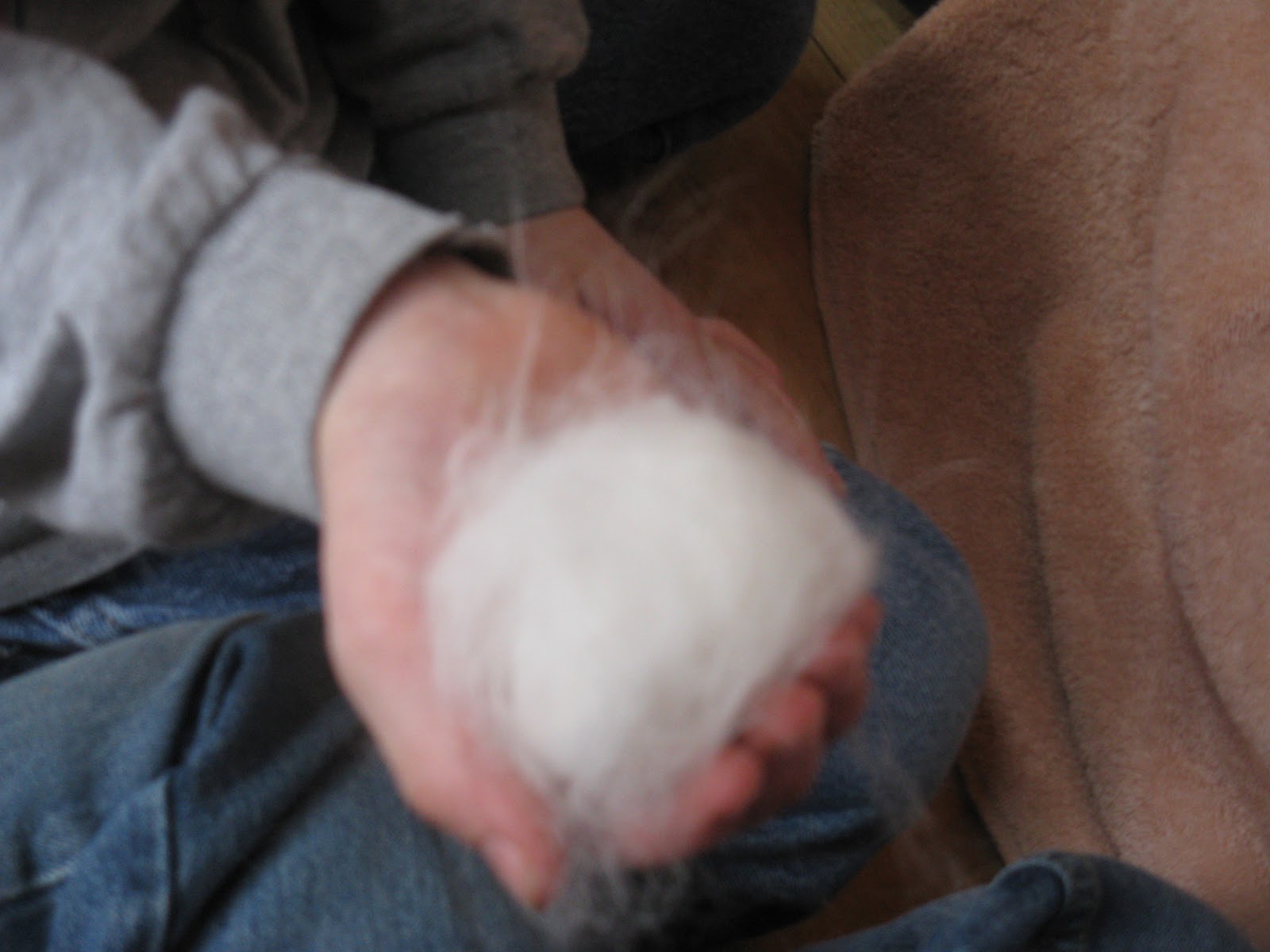
Our French Angora rabbits were in need of "plucking", so we brought Chocolate Chip Muffin (above) and Poof! inside the house to let the children try their hand at it.
The rabbit sat in their lap on a towel. They are used to being handled and are docile and friendly.
The children took turns pulling the fiber ever so gently. Once pressure is exerted, the loose hairs easily come out. The more you pull, the more comes out. It does not hurt the rabbit.
It's soft. . dreamy. . . fuzzy. . . silky.
We save the fiber for felting projects and for spinning, which we plan to learn soon.
Angora fiber is seven times warmer then sheep wool.
Our rabbits must be plucked every 8-10 weeks , to remove the loose hairs. If they try to take care of it themselves , they could end up with *wool block", wool stuck in their intestines.
We feed them timothy hay, in addition to their other food, Hay is fiber and helps break down any wool they may ingest. We also give them a few slices of fresh pineapple from time to time. An enzyme in the pineapple helps breaks down wool too.
French Angoras weigh between 7.5-10 lbs. They require the least grooming as they have guard hairs on top and their wool underneath is protected by those guard hairs.
Some people shear the rabbits or cut with scissors. We pluck ours. Plucking is best to get the long fibers that are best for spinning.
The Angora is one of the oldest types of domestic rabbit, originating in Ankara, Turkey, along with the Angora cat and Angora goat. The rabbits were popular pets with French royalty in the mid 1700's, and spread to other parts of Europe by the end of the century. They first appeared in the U.S. in the early 1900's.
Check out the other sat Farm Friday, hosted by Wabi-Sabi Wanderings.
happy day!